The Purge (2013)
A chilling high-concept thriller that traps its social commentary inside one long, merciless night.
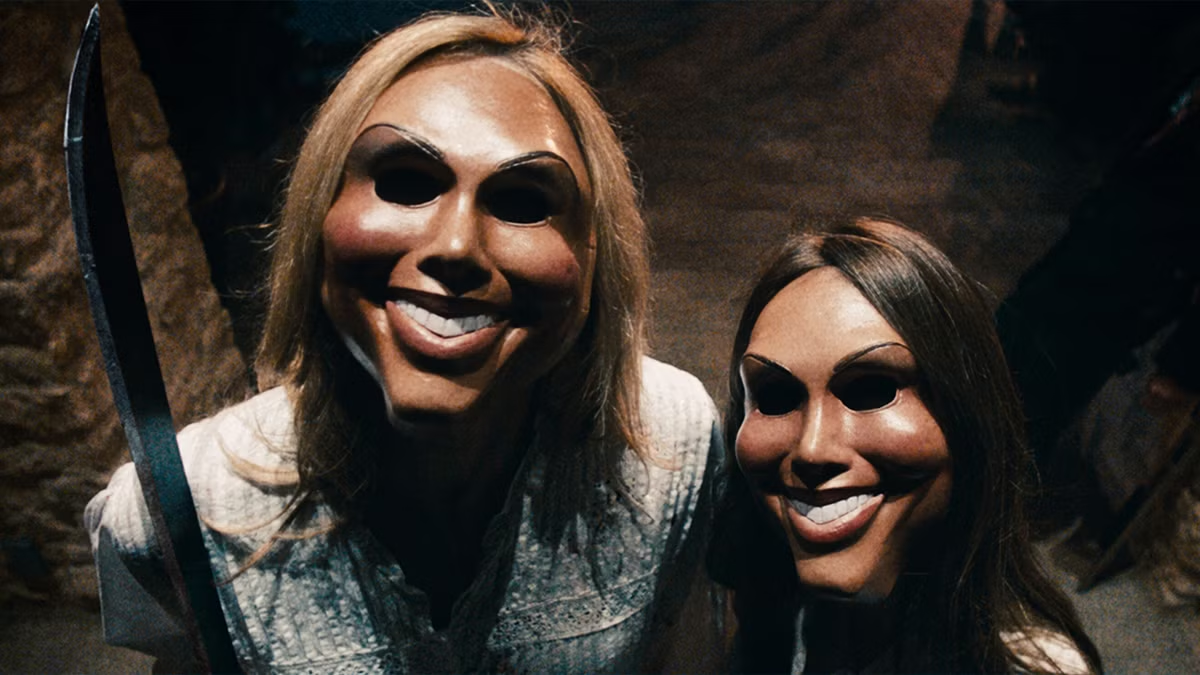
At a Glance
- Director: James DeMonaco
- Cast: Ethan Hawke, Lena Headey, Adelaide Kane, Max Burkholder, Edwin Hodge, Rhys Wakefield
- Subgenres: Home Invasion Horror, Social Horror, Thriller-Adjacent Horror
- Tone & Style: Tense, Claustrophobic, High-Concept, Violent, Single-Location
- Best For: Viewers drawn to dystopian concepts that merge social anxiety with stripped-down survival horror.
- Not ideal for: Those seeking nuanced world-building or subtle social allegory over blunt thematic punches.
- Country of production: United States
- Language: English
Release Date: June 7, 2013 (U.S. theatrical)
Runtime: 85 minutes
Rating: R for strong disturbing violence, and language.
Rotten Tomatoes: Critics 41% • Audience 36%
Metacritic: Critics 41 • User 5.3
Letterboxd: 2.7 / 5
EncoreCraft Score: 60 / 100
Where to Watch: View current streaming availability on JustWatch
Official Trailer
EncoreCraft Breakdown (0–10)
- Rewatch Value: 6 / 10
- Scare Factor: 7 / 10
- Performances: 7 / 10
- Violence and Disturbance: 8 / 10
- Pacing: 6 / 10

Synopsis
Sirens ripple across the suburbs as dusk settles, warning everyone that the rules of society are about to shut off for the night. Inside a spotless, modern home, James Sandin calmly walks his family through their annual routine, steel shutters sliding into place and security monitors blinking to life. The house hums with mechanical reassurance, each lock reinforcing the belief that preparation equals survival. Outside, the streets empty, leaving behind an eerie quiet broken only by distant alarms and muffled screams.
That sense of control fractures when a wounded stranger collapses at the Sandins’ gate, bleeding onto the pavement beneath the surveillance cameras. A moment of compassion opens a door that cannot be closed again, exposing the family to forces their systems were never designed to handle. As masked figures gather beyond the walls, demanding the man’s return, the Sandins are forced to confront how thin the line is between safety and complicity. What follows is not just a fight to survive the night, but a reckoning with the moral cost of surviving at all.

Spoiler-Free Review
The Purge wastes no time establishing its nightmare rhythm. The blare of sirens, the sudden blackout, and the hollow stillness that follows create a visceral shift that feels almost physical. That silence becomes oppressive, pressing in on every room and hallway as the audience realizes how exposed the characters truly are. The film’s power comes from how quickly order collapses once authority steps aside.
Ethan Hawke anchors the tension with a performance built on unraveling composure rather than bravado. His confidence erodes through small, human tells: darting eyes, clenched hands, a voice that tightens when plans stop working. Each glance at the security monitors feels like a plea for reassurance from machines that can only watch, not intervene. The film’s single-location focus turns the house into a trap, its clean design amplifying the sense that comfort and vulnerability share the same walls.
Director James DeMonaco leans heavily on surveillance imagery, often framing danger through screens before letting it spill into physical space. That distance creates a sense of complicity, positioning the viewer as another observer waiting for violence to cross a threshold. When it finally does, the impact is sharp and unsettling. Its 60 EncoreCraft Score reflects a lean, tension-driven experience that grips tightly, even when its thematic reach occasionally outpaces its emotional nuance.
Craft Notes & Background (Non-Spoiler)
- The film was written and directed by James DeMonaco as a standalone concept before becoming a franchise.
- Most of the film takes place in a single location to heighten claustrophobia and reduce production costs.
- The Purge was produced by Blumhouse Productions on a relatively modest budget.
- The film’s premise was inspired by DeMonaco overhearing a conversation about legally sanctioned violence.
- Its success led to multiple sequels and a television series expanding the universe.
⚠️ ⚠️ SPOILERS BELOW ⚠️ ⚠️
The rest of this review discusses the full plot and ending.
⚠️ ⚠️ SPOILERS BELOW ⚠️ ⚠️
Full Plot Recap (Spoilers)
The Sandins’ carefully planned night begins to unravel when their young son notices a wounded man staggering through the street outside their locked gate. Ignoring the panic rising inside the house, he disengages the security system long enough to pull the stranger inside, leaving blood smeared across the pristine floor. Almost immediately, a group of masked hunters appears outside, their voices calm and eerily polite as they request the man’s return. The family realizes too late that their systems have made them visible, not protected.
As the night stretches on, the intruders breach the home, turning hallways into kill zones and rooms into hiding places. James’s belief in preparation collapses as he is forced into direct confrontation, culminating in his sudden, brutal death while trying to shield his family. The moment is swift and unceremonious, emphasizing how arbitrary survival becomes during the Purge. Leadership evaporates, leaving the remaining family members scrambling in fear and grief.
Just as escape seems possible, a new threat emerges from within their own community. Armed neighbors arrive, dressed neatly and speaking calmly, revealing their intention to purge under the guise of civic responsibility. The betrayal reframes the night’s violence as systemic rather than random, exposing how sanctioned brutality invites participation from those who feel entitled to it. Dawn finally arrives with the return of sirens, restoring order without justice.
The Sandins survive, but the home that once symbolized safety now feels hollow. Blood-stained floors and shattered trust linger as silent reminders of what was justified in the name of survival. The night ends not with relief, but with a quiet understanding that nothing has truly been resolved. The system remains intact, waiting patiently for the next siren.
Spoiler Analysis
Fear in The Purge does not explode all at once; it erodes judgment piece by piece. Each decision the Sandins make under pressure feels understandable in isolation, yet disastrous in accumulation. Compassion opens the door, hesitation delays action, and trust in systems replaces moral clarity. The film shows how fear narrows options until survival itself becomes an excuse for almost anything.
Formally, the film’s horror mechanism relies on controlled escalation rather than spectacle. Surveillance footage, muffled sounds through walls, and distant screams build dread before violence ever enters the room. When blood is finally spilled, it feels abrupt and ugly, not cathartic. The house’s rigid geometry reinforces this effect, turning every corner into a potential blind spot and every locked door into a liability.
The ending refuses comfort, offering survival without resolution. Order returns not through accountability, but through a reset button imposed by authority. That structure suggests a society more interested in managing violence than preventing it. By stopping the story at dawn rather than closure, The Purge leaves its audience with an unsettling implication: the real horror is not the night itself, but the willingness to repeat it again next year.
Hidden Craft & Story Secrets (Spoilers)
- The masked antagonists were intentionally designed to resemble distorted smiles to evoke performative civility.
- James’s death was scripted early to avoid a conventional heroic survival arc.
- The neighbors’ uniforms subtly mirror law enforcement aesthetics to blur authority lines.